The Firmlever Weekly Roundup: Issue #42
The Bookkeeper Graveyard


Botkeeper. Bench. Jenesys. Over $200 million raised. All gone. Here's what that means for your firm.
Let me tell you a story about a graveyard nobody's talking about.
Over the past 14 months, three venture-backed companies that promised to "revolutionize" bookkeeping for small businesses have either shut down, nearly died, or vanished entirely.
One just last week...more on that meltdown in a bit.
Combined, they raised over $200 million in investor capital. They hired hundreds of people. They ran Super Bowl-adjacent ad campaigns. They had slick pitch decks with hockey-stick projections and slides about "the future of accounting."
Now they're gone.
So I decided to follow the money.
(To brush up on terminology, see my latest post on firm valuation terms so you too can sound like the smartest person in the room):
 Marc Howard
If you're a firm owner grossing $500K to $5M, you should be paying very close attention. Not because their failure threatens you--but because it proves something you've probably suspected for a while: the Silicon Valley model of accounting is broken.
And your model, the "boring" one, the one where you actually know your clients by name is the model that wins.
Let me walk you through the wreckage. 🔥
Bench: The One That Died on Christmas
Two days after Christmas 2024, Bench Accounting--a Vancouver-based startup that had raised $113 million and served more than 12,000 small businesses--posted a notice on its website that it was shutting down.
Effective immediately.
No warning. No transition plan. Just a note suggesting customers file for a six-month IRS extension and maybe try some other provider called Kick.
Twelve thousand businesses. Locked out of their own financial data. Right before tax season:
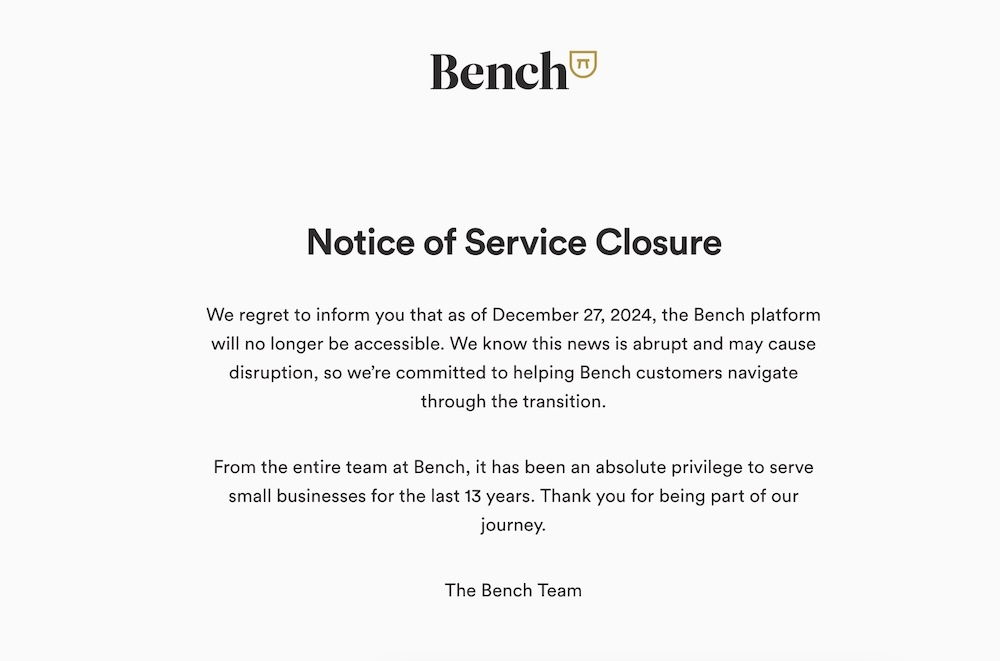
The founder, Ian Crosby, had already left the company in 2021 after disagreements with the board. The "professional CEO" they brought in lasted about two years before stepping down quietly in November 2024--one month before the lights went out.
Three days later, a company called Employer.com--an HR tech firm that had never done accounting before and whose CEO had just bought the domain name for $450,000--swooped in to "acquire" Bench.
They started calling employees back to work. The website flickered between an acquisition announcement and a blank page. Twice in the same afternoon.
The rescue, such as it was, didn't change the fundamental reality: a company that had positioned itself as the future of small business bookkeeping couldn't sustain itself long enough to make it through a single holiday weekend.
Botkeeper: The $90 Million Bonfire
In early February 2026—just weeks ago--Botkeeper announced it was shutting down after 11 years and roughly $90 million in venture funding.
The CEO, Enrico Palmerino, blamed a "perfect storm" of macroeconomic shifts and industry consolidation. But the real story is simpler and more damning.
Between 30 and 40 percent of Botkeeper's revenue came from about 10 large accounting firm clients. When the M&A wave hit those firms—mergers, acquisitions, consolidations—Botkeeper's client base evaporated almost overnight. Palmerino said the entire collapse happened in eight days, with most of the damage occurring in a 72-hour window.
The company tried to find a buyer. They negotiated with lenders. They sought bridge capital. Nothing worked. Botkeeper had gone nearly four years without a successful funding round--since November 2021. In an era when AI companies were raising money hand over fist, that silence spoke volumes.
Industry observers pointed out something even more uncomfortable: by the time Botkeeper shut down, its core technology--machine learning-based transaction coding--had been lapped by a new generation of generative AI tools.
What Botkeeper was doing with expensive, custom-built models, a dozen newer startups could now do better and cheaper. One former employee compared it to bringing a butter knife to a steak knife fight.
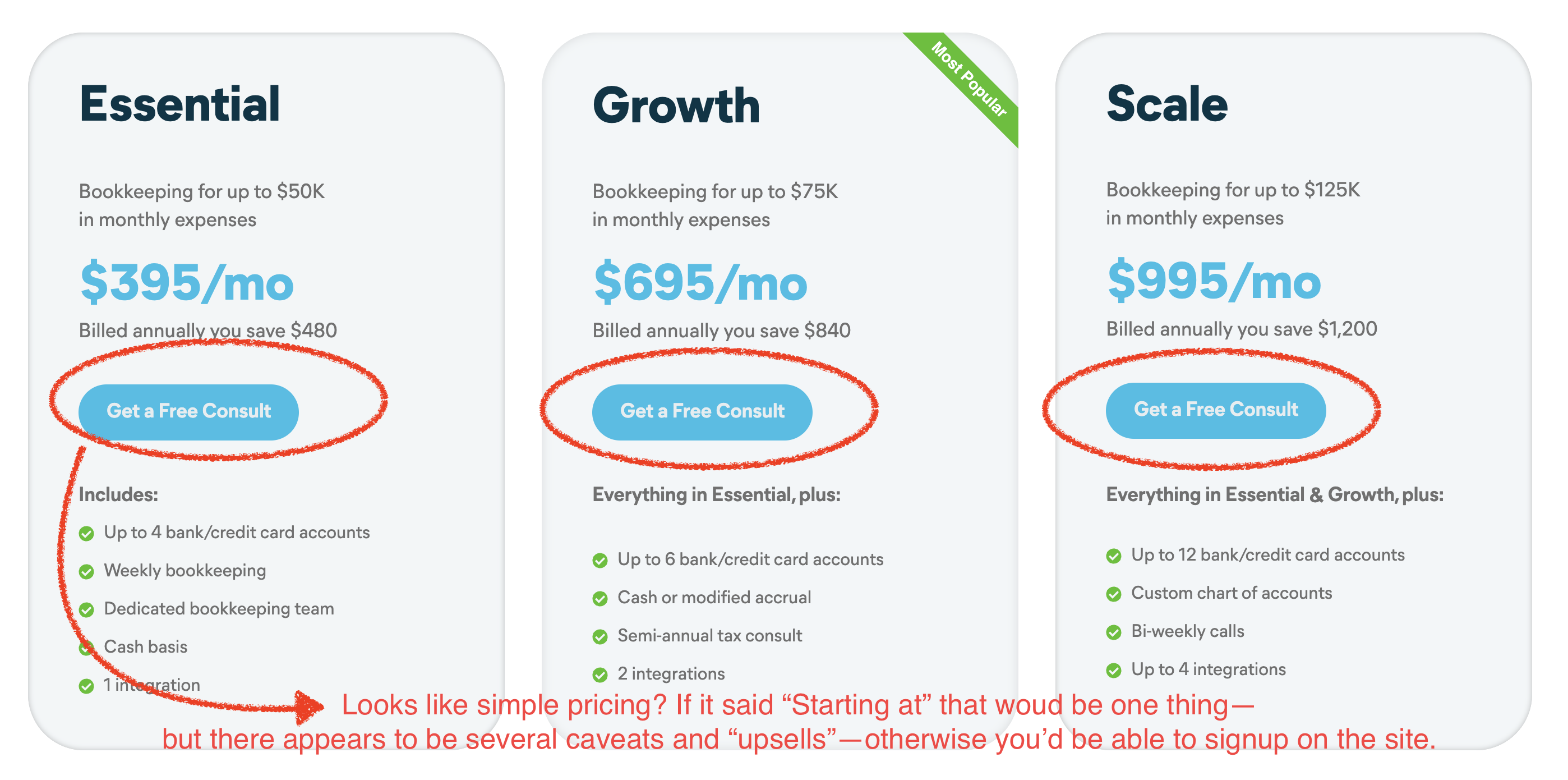
Botkeeper's tech assets were eventually picked up by Xendoo. The rest of the company is gone. Interestingly enough, Xendoo, a cross between Botkeeper and Bench--and seems to be going down the exact same path--they even have three tiered pricing (this is nice in theory, not so nice when it means putting square customers into round holes):
Back to Botkeeper...
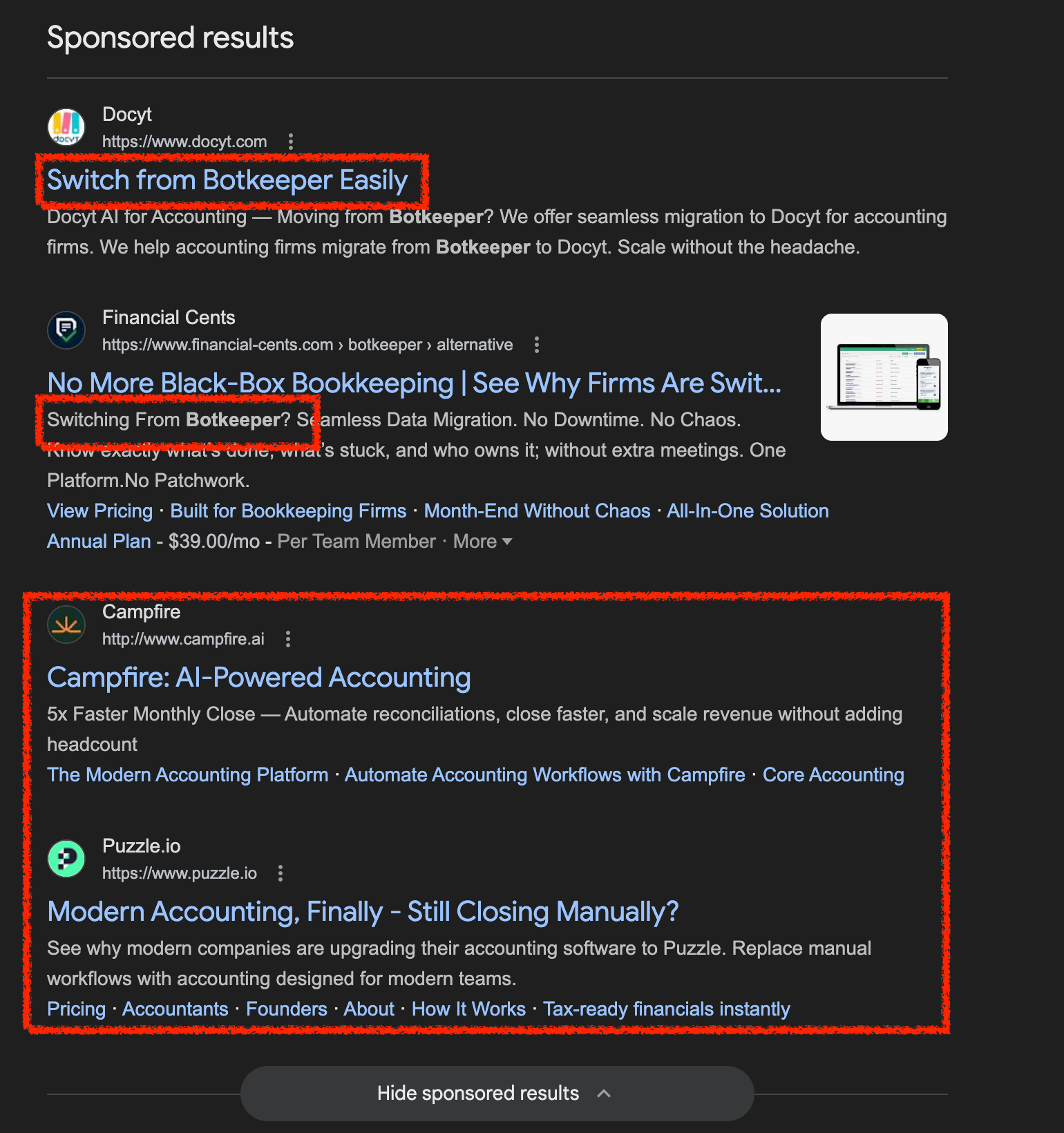
Google "botkeeper" and you can see that competitors pounced at the chance to buy up the "botkeeper" keywords and snatch up their client base:
Jenesys: The One That Just... Disappeared
This one is the quietest and, in some ways, the most telling.
Jenesys AI was a UK-based accounting AI startup that spent three years building a product they called Jack--an AI assistant designed to give accountants and their SMB clients near-real-time financial visibility.
They worked with more than 10 percent of the UK's Top 100 accounting firms. They had genuine believers in the industry.
And then out of the blue--just a week ago, the CEO posted a goodbye letter on LinkedIn:
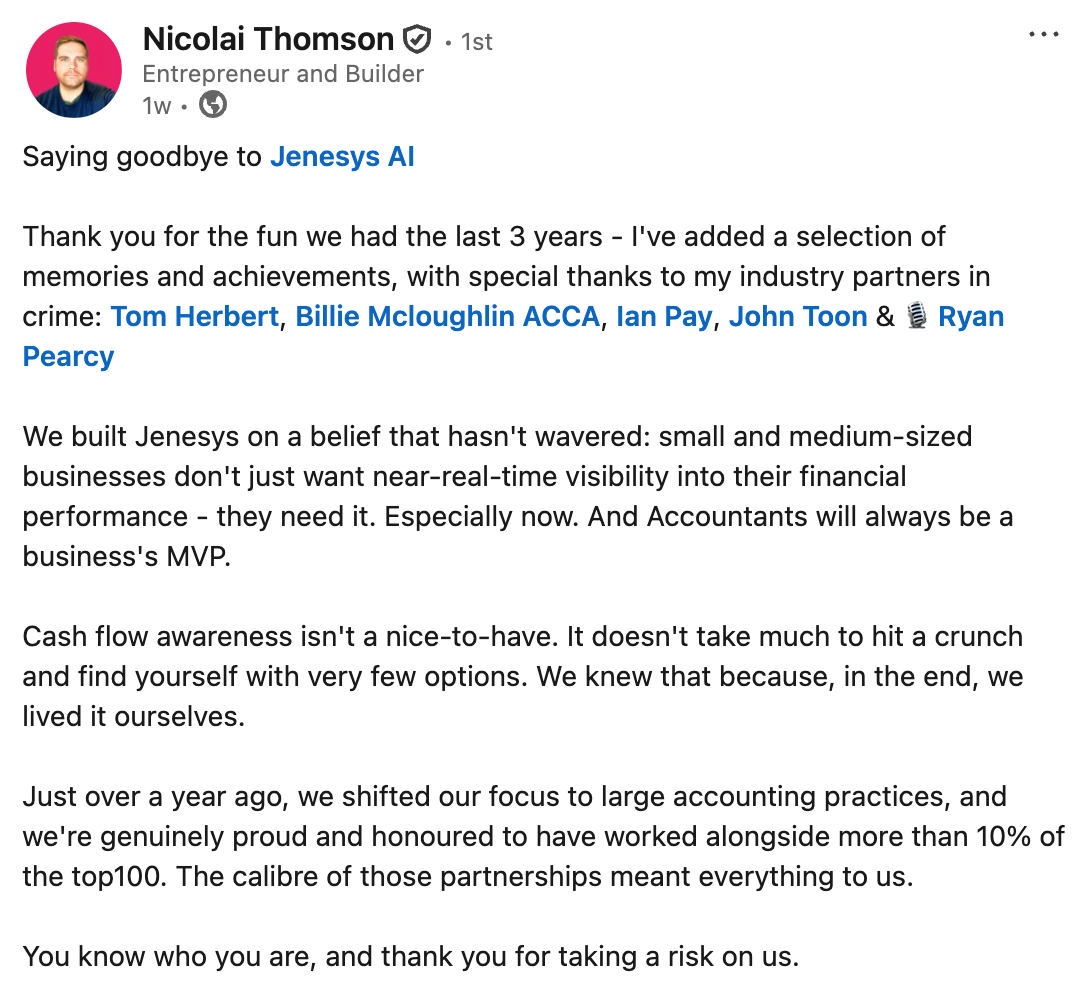
Following the money, the failure of a key investor had created a cash flow crisis they couldn't recover from. They explored an acquisition. It fell through. So they chose voluntary insolvency--specifically to protect client data from being sold off in a liquidation.
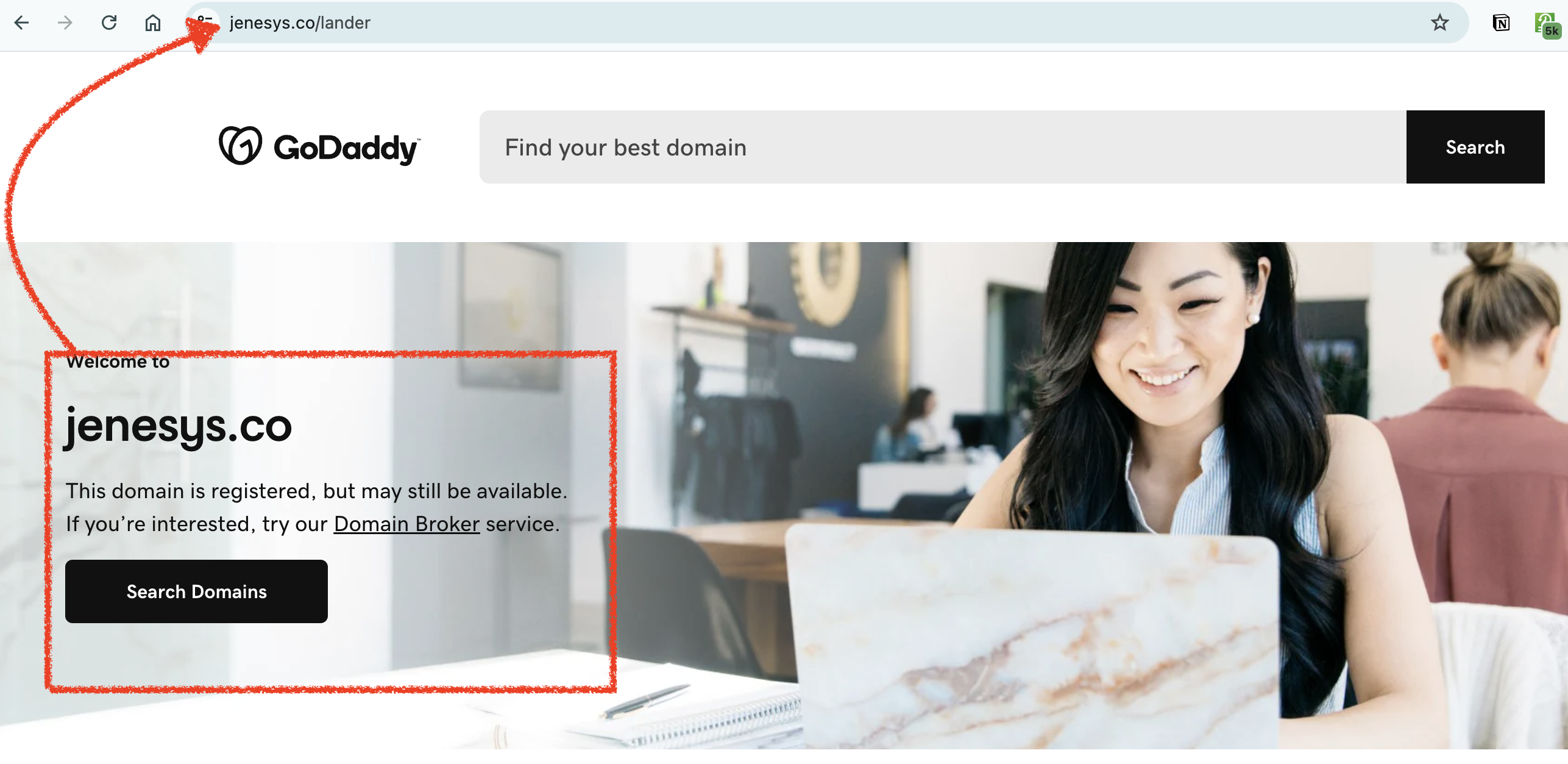
That LinkedIn post is all that's left. If you visit their website today, you'll find a parked GoDaddy domain. No redirect. No archive. No "we've been acquired" banner. Just... nothing. A company that served some of the most respected firms in the UK, reduced to a domain registrar's placeholder page:
The Pattern Nobody Wants to Admit
Here's what these three companies had in common, and it's not what the tech press will tell you.
It wasn't bad technology. Botkeeper's AI genuinely worked. Bench's platform was clean and user-friendly. Jenesys was doing interesting things with real-time financial data.
It wasn't bad timing. The market for accounting services is enormous and growing. There's a well-documented talent shortage. Demand has never been higher.
What killed them was the business model itself.
All three were playing the same game: use technology and cheap labor (whether offshore teams or AI) to undercut the cost of doing bookkeeping, then scale to millions of clients to make the math work on razor-thin margins.
Bench paired software with in-house bookkeepers. Botkeeper used machine learning plus human review. Jenesys built AI on top of existing accounting workflows.
Every single one of them discovered the same brutal truth: accounting is not a scale game but a trust game.
When you're doing someone's books, you're handling the most sensitive information in their business. You're the person who knows what they really make, what they really owe, and where the bodies are buried.
That relationship doesn't commoditize well. It doesn't compress into a SaaS margin. And it absolutely does not survive the moment your venture-backed provider sends out a "we're shutting down" email two days after Christmas.
The race to do bookkeeping cheaper--whether through labor arbitrage, AI automation, or some combination of both--is a race to the bottom. And at the bottom, there is no margin. There is no moat. There is only a countdown to the day your investors get tired of funding losses.
Why Your Firm Is the Real Winner Here
I know this might sound self-serving coming from someone who builds tools and playbooks for accounting firms. But hear me out, because this is the part that matters.
If you're a firm owner doing compliance, bookkeeping, and tax work for small businesses, the last 14 months should make you feel something you maybe haven't felt in a while: confident.
Every one of these companies was built on the premise that you are the problem.
That your firm is too slow, too expensive, too old-school. That a platform could replace what you do with an algorithm and a team in Manila.
They were wrong. And they spent a quarter of a billion dollars proving it.
Here's what they couldn't replicate:
- You know that your restaurant client's revenue dips every February.
- You know that the contractor two towns over just lost his biggest subcontractor.
- You know that the dentist is thinking about selling in three years and needs her books clean.
That context--that relationship--is not a feature you bolt on.
It's the product.
The firms that are going to thrive over the next five years aren't the ones that try to out-automate Silicon Valley. They're the ones that use these tools internally--the AI, the offshore support, the automation--to make themselves more efficient, and then pass that efficiency on as better service, not lower prices.
The difference between a failed startup and a thriving firm is this: the startup tried to replace the accountant. The thriving firm is the accountant, armed with better tools.
Niche down. Serve a specific industry. Know your clients cold. Price on value, not hours.
Use AI to handle the 80% that's repetitive so you can spend your time on the 20% that actually matters--advising, planning, and being the person your client calls when things get complicated.
Where some see a race to the bottom–I see a moat.
What I'm Building
This is exactly why I'm building Firmlever Exchange.
Exchange doesn't replace the relationship, it routes it while making your firm more valuable.
I'm building a platform that helps solo to lower middle market accounting firms stay competitive in an increasingly commoditized world--by showing you exactly where you're underpriced, where your capacity is trapped, and where your next dollar of profit is hiding.
Perhaps the best part about the new platform is the private network feature. Where firm owners can acquire/buy, divest/sell, and refer clients to other verified firms in the network.
Zero transaction fees.
Zero success fees.
Zero retainers.
Zero brokers.
100% deal flow, on-demand.
Currently in private beta. If you're interested reply "EXCHANGE" and I'll add you to the early invite list.
Last, But Not Least
I'm kicking off Season 2 of Pitch Your Firm. If you're interested in being a guest reply "PODCAST" with a brief note on your story and if its a good fit for our audience we'll get you booked.
Some of Season 1's action (click to watch):
-Marc
P.S. - Forward this newsletter to a peer or friend if you feel this was helpful--chances are you might make their day.